Loading…
Loading…
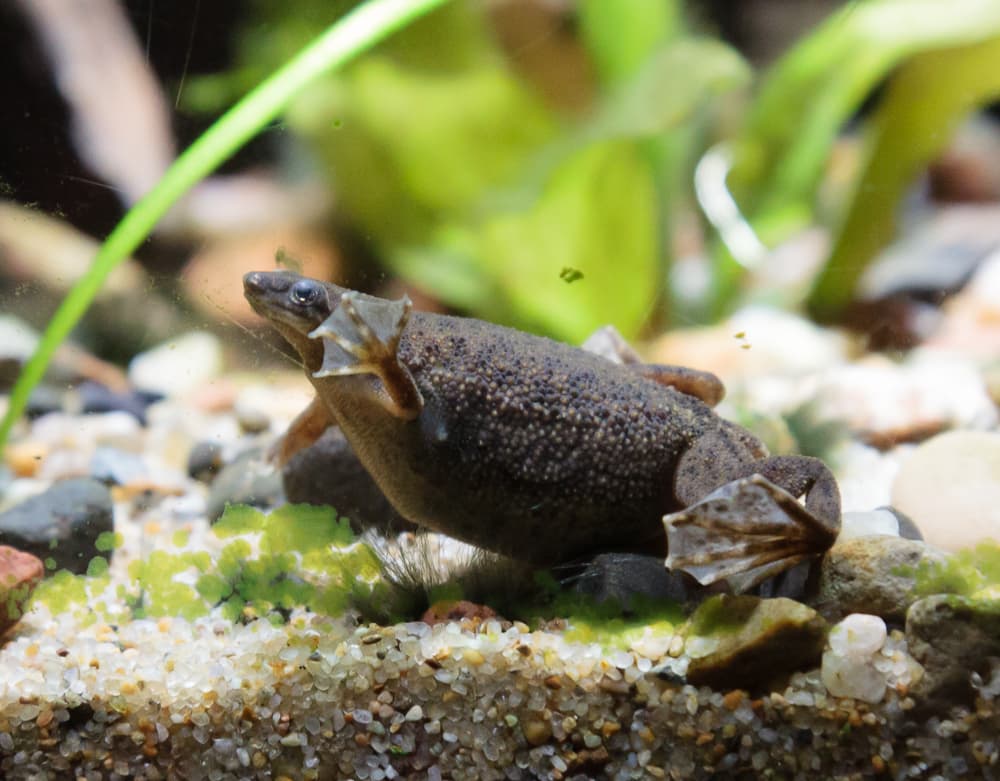
African Dwarf Frog · Golden African Dwarf Frog
Tiny fully-aquatic frog that sings underwater
A frog that never leaves the water: dwarf frogs float, glide, and males buzz-sing underwater at night. Keep trios in a lidded 10-gallon tank (they escape!) and hand-feed sinking food past the fish.
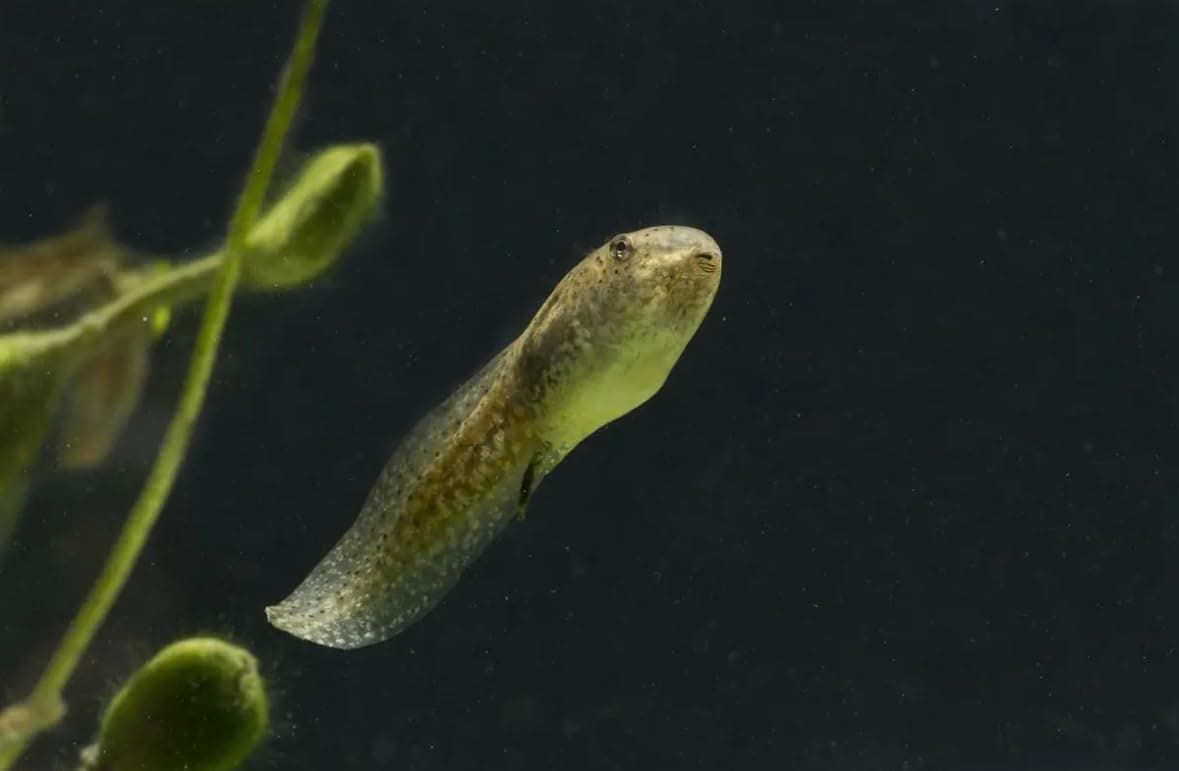
Photo: Wikimedia Commons / Julia Sumangil / CC BY-SA 4.0
Care guide last reviewed: · Care requirements referenced from veterinary and humane standards.
10-gallon filtered tank with a tight lid; group of 3+.
Quiet (2/5)
Highly independent — comfortable alone 8+ hours
Thrives with daily company
Three curated supplies researched for this companion's specific anatomy and daily welfare
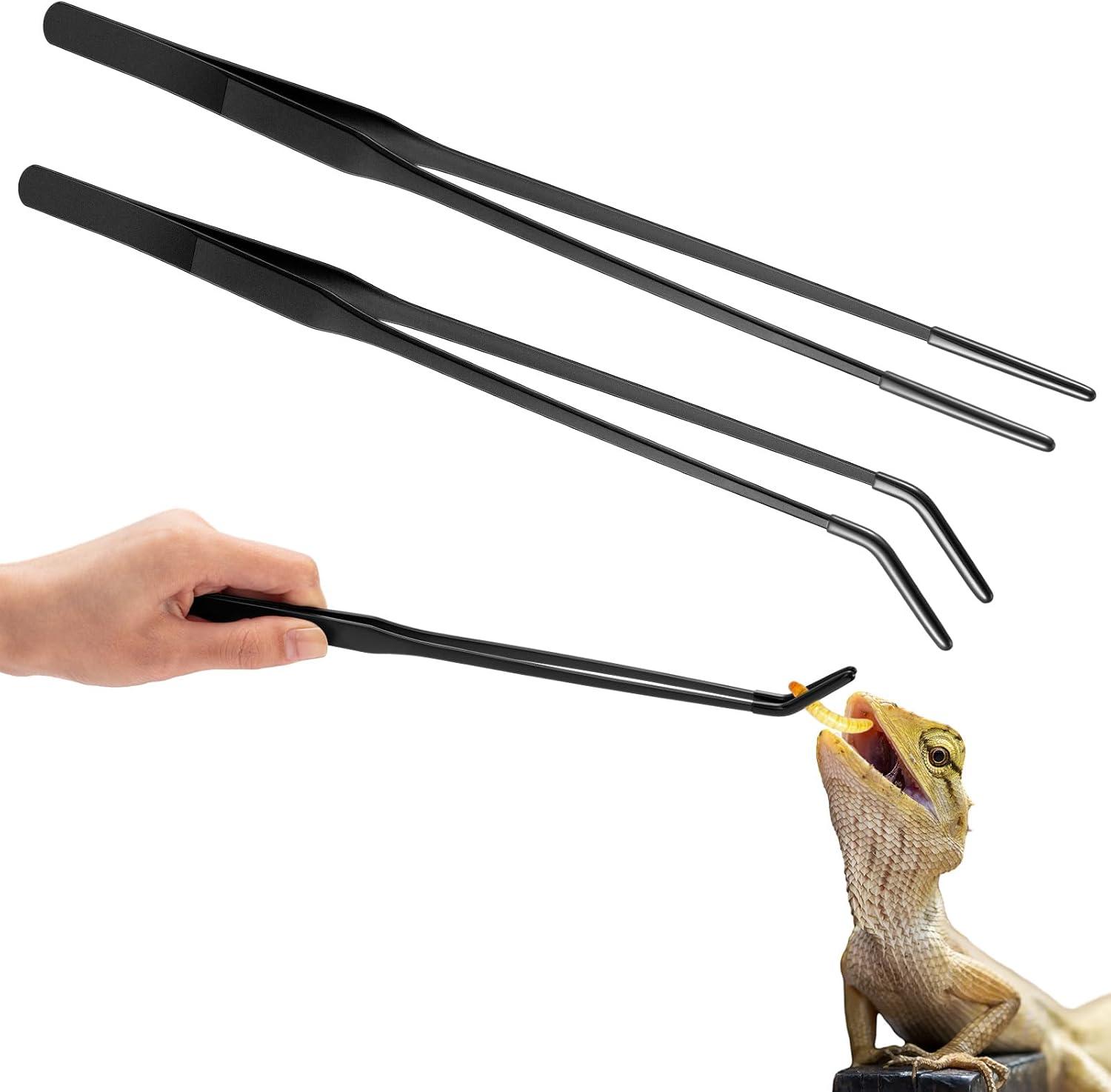
African dwarf frogs have poor vision and no teeth, easily losing food to faster fish; long curved blunt tongs deliver sinking food directly in front of their snouts.
Fully aquatic frogs search the substrate bottom by scent; high-protein micro pellets sink directly to the tank floor without clouding the water.

African dwarf frogs have delicate scaleless skin prone to cuts from jagged stones; smooth rounded ceramic rock tunnels provide safe resting burrows.
As an Amazon Associate, WhatPetSuitsYou earns from qualifying purchases. Product prices and availability are accurate at Amazon and subject to change.
As pets, dwarf frogs are peaceful, fully-aquatic entertainers that glide, float with limbs spread, and perch on leaves near the surface. Kept as a trio or more, they interact gently and males hum and buzz-sing underwater on spring nights, a sound felt as much as heard. They are strictly hands-off: tiny permeable bodies absorb hand chemicals, and handling risks escape and injury, so all care happens with nets and bastes, never fingers.
There is no fur, no smell beyond normal aquarium scent, and only soft singing for noise. They do best species-only or with shrimp and snails only; fish outcompete and harass them, so avoid fish tankmates. Expect quiet underwater company, not a pet that knows you.
African dwarf frogs are nearly blind carnivores that need target-fed sinking food. Staples are defrosted bloodworms, brine shrimp, blackworms, daphnia, and small sinking carnivore pellets, offered daily in small portions the trio finishes in a few minutes. Because they hunt by smell and cannot compete with fish, hand-feed with a turkey baster, feeding dish, or clear tube that drops food right at their snouts, and watch each frog eat.
Thaw frozen foods in tank water first so they sink instead of floating past. Never rely on fish flakes or leftover fish food: frogs starve slowly in community tanks while appearing fine. Vary protein across the week, remove uneaten food within minutes to protect water quality, and fast one day weekly to prevent bloat.
Keep a group of three or more in a cycled 10-gallon filtered tank with a heater holding 23 to 26C, since these are tropical fully-aquatic frogs that breathe air at the surface. A tight-fitting lid with no gaps is mandatory: dwarf frogs climb airline tubing and escape through tiny openings, dying quickly out of water. Keep water shallow enough for easy surfacing, around 20 to 30 cm deep, with gentle filtration baffled to low flow, smooth hides, silk or live plants for cover, and fine sand or a bare bottom for easy cleaning.
Cycle the tank fully before arrival, condition all water, and keep ammonia and nitrite at zero with nitrate under 20 ppm through weekly changes. Choose peaceful tankmates only, such as shrimp or snails: bettas and nippy fish harass frogs.
Daily care takes 5 to 10 minutes plus a weekly water change. Each day: target-feed sinking food with a baster, confirming each frog eats, check the heater thermometer reads 23 to 26C, confirm the lid is fully closed, and remove uneaten food and waste. Watch surfacing behaviour: occasional trips up to breathe are normal, constant frantic surfacing means low oxygen or toxic water.
Weekly, change 20 to 30 percent of the water with conditioned temperature-matched water, siphon the substrate, and test pH, ammonia, nitrite, and nitrate. Monthly, rinse filter media in old tank water and inspect frogs for clear eyes, intact webbed feet, and healthy weight. Always wash hands before and after tank work, and never release frogs or tank water into waterways.
Dwarf frogs are sensitive to water quality above all: ammonia or nitrite poisoning shows as lethargy, loss of appetite, frantic surfacing, and redness, while chytrid fungus and bacterial infections cause skin dullness, sores, and bloating. A thin frog in a community tank is usually starving from food competition, not diseased, and needs separate target feeding. Dropsy with edematous bloat needs prompt vet care.
Prevention means a cycled filtered tank, weekly testing and changes, quarantine of newcomers for 30 days, no wild-caught tankmates, and dechlorinated water every time. Aquatic-amphibian vets are scarce and visits cost 50 to 100, so husbandry is the medicine. Seek help for persistent bloat, skin lesions, or any frog floating uncontrollably or unable to surface.
African dwarf frogs are the cheapest pet in this whole guide. The frogs themselves cost a few pounds each, and a 10-gallon setup with heater, gentle filter, lid, thermometer, test kit, conditioner, sand, and plants runs 100 to 200. Food is frozen bloodworms, brine shrimp, and sinking pellets at a few pounds a month for a trio. Electricity for a small heater and filter is modest.
Budget 5 to 10 a month ongoing. Vet care is rarely sought for animals this small and is hard to find, so prevention through water testing carries the load. Over a 5 to 7 year lifespan the total cost is minimal. The only expensive mistake is skipping the cycle, heater, or test kit: crashed water quality kills the whole trio within days.
Dwarf frogs suit beginners who want an aquarium with extra charm and can commit to target feeding and weekly water care. You will succeed if you keep a tight lid, feed each frog deliberately with a baster rather than scattering food, and test water weekly. You will struggle if you hoped frogs would clean the fish tank: they add bioload and need their own feeding, or if maintenance bores you, since water changes are forever.
They are poor fits for uncycled bowls, unheated tanks, or homes with cats that sit on lids. Children love watching their underwater singing and zooming, but adults must own the water chemistry and feeding routine throughout the 5 to 7 year life.
Sinking meaty foods: defrosted bloodworms, brine shrimp, blackworms, daphnia, and small carnivore pellets, fed daily. They are nearly blind, so target-feed with a turkey baster right at each frog's snout.
Never rely on fish flakes: frogs starve while fish thrive.
Absolutely: a tight lid with zero gaps is essential. They climb filters and tubing, squeeze through small openings, and die within minutes out of water.
Check the lid every night as part of the routine, and keep water a few centimetres below the rim.
Occasional surfacing to breathe air is normal. Constant floating, frantic surfacing, or inability to dive signals poor water quality, low oxygen, or illness: test ammonia, nitrite, and nitrate immediately and change conditioned water.
See a vet for bloat, sores, or persistent floating.
Take our free 15-question what pet should I get quiz to get a personalized compatibility score and see how they match your living environment.
Take the Free Pet Quiz