Loading…
Loading…
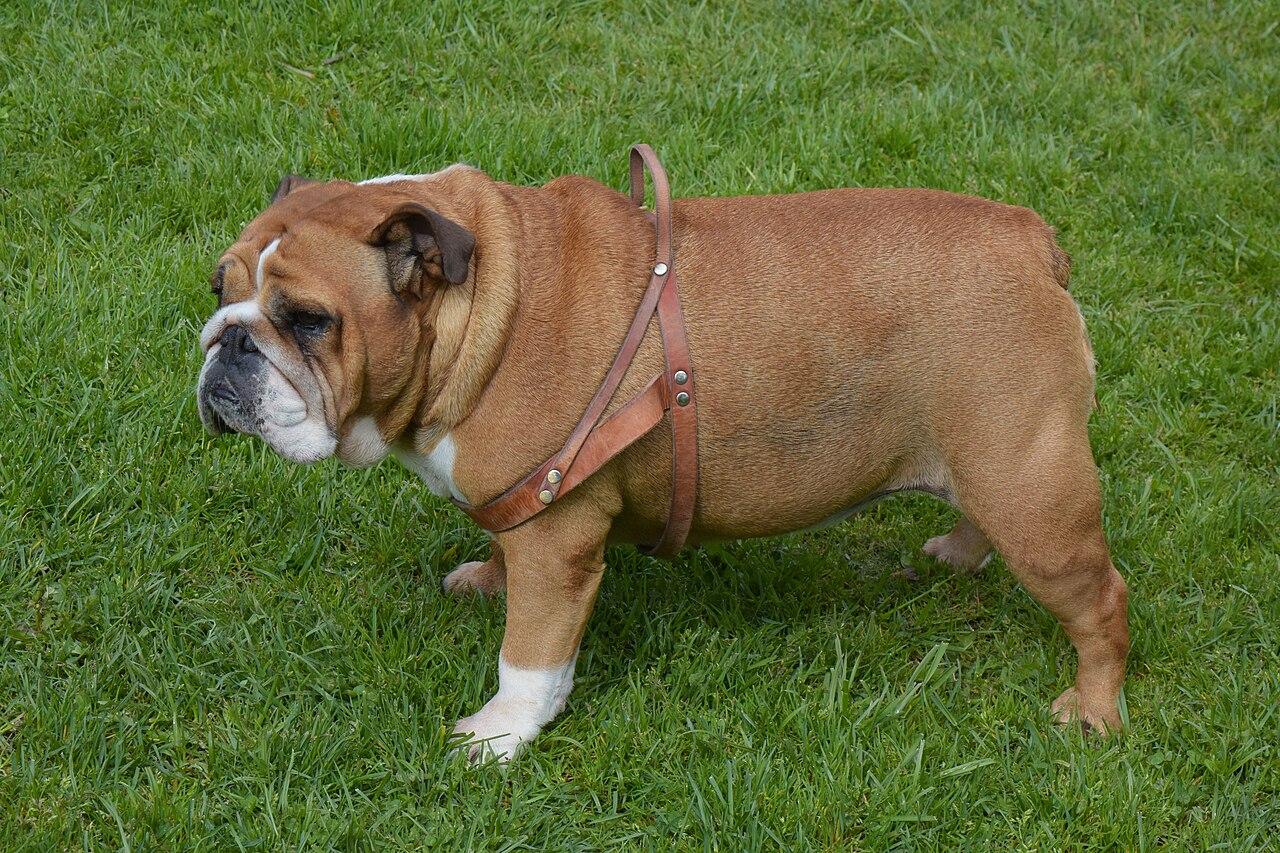
English Bulldog
Wrinkly couch philosopher — calm, loyal, low-energy
A calm, courageous lump of love: great with kids, needs only short waddles, and naps professionally. But this is the highest-maintenance breed here — skin folds, breathing, heat, and vet bills demand budget and commitment.
Photo: Wikimedia Commons / Joselodos / CC0
Care guide last reviewed: · Care requirements referenced from veterinary and humane standards.
Cool home without many stairs; air conditioning in summer is essential.
Moderate (3/5)
Tolerates a normal workday with enrichment
Thrives with daily company
Three curated supplies researched for this companion's specific anatomy and daily welfare

Bulldogs possess deep facial creases and inverted tail pockets where bacterial pyoderma thrives; clinical chlorhexidine pads keep closed crevices sterile.

Carrying massive weight on compact chondrodystrophic limbs, English Bulldogs require high-density memory foam to protect their elbows and hips from bursitis.

Bending down to ground level strains an English Bulldog's heavy neck and triggers gastric reflux; raised wide feeding bowls facilitate smooth esophageal transit.
As an Amazon Associate, WhatPetSuitsYou earns from qualifying purchases. Product prices and availability are accurate at Amazon and subject to change.
As a pet, the Bulldog is a dignified couch philosopher: calm indoors, patient and protective with children, quietly devoted, and content to nap professionally between short waddles and meals. Noise is moderate — snores, snorts, and gurgles rather than barks — and exercise demands are the lowest here, suiting calm households and less mobile owners. The honest price is maintenance: daily fold wiping, year-round shedding, drool strings, wind, heat intolerance, swimming inability, stair difficulty, and the shortest lifespan in these guides at 8 to 10 years.
It needs family company and cool air, not mountains or marathons. Give it comfort, routine, and medical diligence, and you get a courageous, loving lump of loyalty.
Feed a complete adult food in two measured meals daily — most 40 to 55 lb Bulldogs need roughly 900 to 1,200 calories, or 1.5 to 2.5 cups of standard kibble — because obesity is the great multiplier of every Bulldog disease: it fattens throat tissues and worsens BOAS, deepens skin folds into infected crevices, overloads dysplastic hips, and nearly triples heatstroke death risk. Use a slow-feeder bowl (flat faces gulp air), rest 30 minutes either side of meals, and keep treats under 10 percent; many Bulldogs have food and environmental allergies needing a steady vet-chosen recipe rather than constant switching.
Puppies need 3 small meals until 6 months. Avoid chocolate, grapes, raisins, onions, garlic, xylitol, cooked bones, and fatty scraps, and weigh monthly — ribs should be felt easily under the wrinkles.
A cool ground-floor home with minimal stairs is the setup: air conditioning is essential, not a luxury, plus cooling mats, water in every room, and walks scheduled at dawn and dusk from late spring to early autumn. Fit a wide chest harness — never a neck collar — and provide an orthopaedic bed in the coolest room, since heavy Bulldogs overheat lying in sun and struggle to rise from soft deep sofas.
A crate or pen gives calm rest space, and stair gates protect hips, elbows, and breathing on climbs. Block pools and ponds (Bulldogs swim like stones), fence gardens securely at modest height, and never kennel outdoors or leave the dog in a car even for minutes.
Give just 20 to 40 minutes of gentle exercise daily: the Bulldog Club of America suggests starting around half a mile and building toward about 2 miles a day, split into short cool-weather waddles — 30 minutes of your time covers most days. Clean facial folds, nose rope, tail pocket, and vulvar folds daily with a wipe then dry completely (3 to 5 minutes — trapped moisture breeds infection within days), brush the short coat weekly, trim nails every 3 to 4 weeks, clean ears weekly, and bathe every 4 to 8 weeks (weekly for show or allergy dogs).
Above about 22 to 24°C, skip walks for puzzle toys and chews. Any open-mouth distress, blue gums, staggering, or vomiting in heat is an emergency.
Register with a brachy-experienced vet and attend annually at minimum, reporting noisy breathing, sleep apnoea, gagging, fainting, fold smell or redness, limping, or cherry eye without delay. BOAS affects an estimated 40 percent and airway surgery ($2,000 to $6,000) is common; ask about Cambridge respiratory grading before breeding or buying. Skin-fold dermatitis is extremely common (tens of times the crossbreed rate) and needs lifelong daily cleaning plus allergy management ($50 to $150 a month).
Expect cherry eye and eyelid surgery, ear infections, hip and elbow dysplasia, cruciate tears, corkscrew-tail infections, and difficult anaesthesia and whelping (most litters arrive by caesarean). Insure to the highest limit available from week one.
Budget $250 to $400 a month — the steepest here: $60 to $90 for food and allergy-aware treats, $30 to $50 for prevention and amortised vaccines, $20 to $40 for wipes, shampoos, and ear care, and $80 to $130 for insurance, which Bulldogs need more than any breed in these guides. Routine vet care alone runs $800 to $2,000 yearly; with chronic skin, breathing, or joint disease, $3,000 to $6,000, and seniors with BOAS plus arthritis can exceed $8,000 to $12,000 a year.
First year costs $3,000 to $5,000 before the purchase price ($2,500 to $5,000+ from tested breeders). One airway or orthopaedic surgery dwarfs years of routine spending — budget for it from day one.
Bulldogs are a poor choice for most beginners despite the calm, low-exercise appeal — the profile's maximum vet, budget, and upkeep scores say it plainly. You will succeed only with a generous vet budget, top-tier insurance, air conditioning, ground-floor living, tolerance for daily fold cleaning, snoring, drool, and flatulence, and a Bulldog-savvy vet on call.
Casual owners, hot-climate renters without cooling, stair-filled townhouses, and anyone hoping for a jogging partner or a 15-year companion (8 to 10 years is typical) should choose a Pug or Cavalier for the clownish sweetness at far lower cost. If you commit with eyes open, few dogs love their family more steadfastly.
Keep it lean, cool, and clean: two measured meals daily, dawn-and-dusk short walks building toward about 2 miles a day, air conditioning in summer, a harness never a collar, and daily fold cleaning with thorough drying. Book a brachy-savvy vet early, insure to high limits, learn heatstroke and breathing warning signs, and never leave the dog in cars, heat, pools, or on long stair climbs.
Thirty minutes of care daily prevents most crises.
Only 20 to 40 minutes of gentle exercise daily: short cool-weather walks, starting near half a mile and building gradually toward about 2 miles, per the Bulldog Club of America. Never jog, hike, or play hard with a Bulldog, skip exercise above about 22 to 24°C, and stop at any noisy or open-mouth breathing.
Bulldogs that are pushed in heat can collapse within minutes — puzzle toys beat extra miles.
Usually not. The calm temperament appeals, but Bulldogs carry the highest vet bills, shortest lifespan (8 to 10 years), and most intensive daily maintenance of any breed here — folds, breathing, heat rules, and allergies.
First-timers succeed only with a large budget, insurance, air conditioning, and a specialist vet. A Pug or Cavalier offers similar sweetness with far lower demands.
The flat face (BOAS surgery $2,000 to $6,000), skin folds (dermatitis at tens of times the crossbreed rate, lifelong allergy drugs), eyes (cherry eye, eyelids), joints (hips, cruciates), corkscrew tails, and high-risk anaesthesia stack up: routine care $800 to $2,000 yearly, chronic cases $3,000 to $6,000, seniors up to $12,000. Weight control and daily fold cleaning are the two cheapest interventions; comprehensive insurance from puppyhood is the third.
Take our free 15-question what pet should I get quiz to get a personalized compatibility score and see how they match your living environment.
Take the Free Pet Quiz