Loading…
Loading…
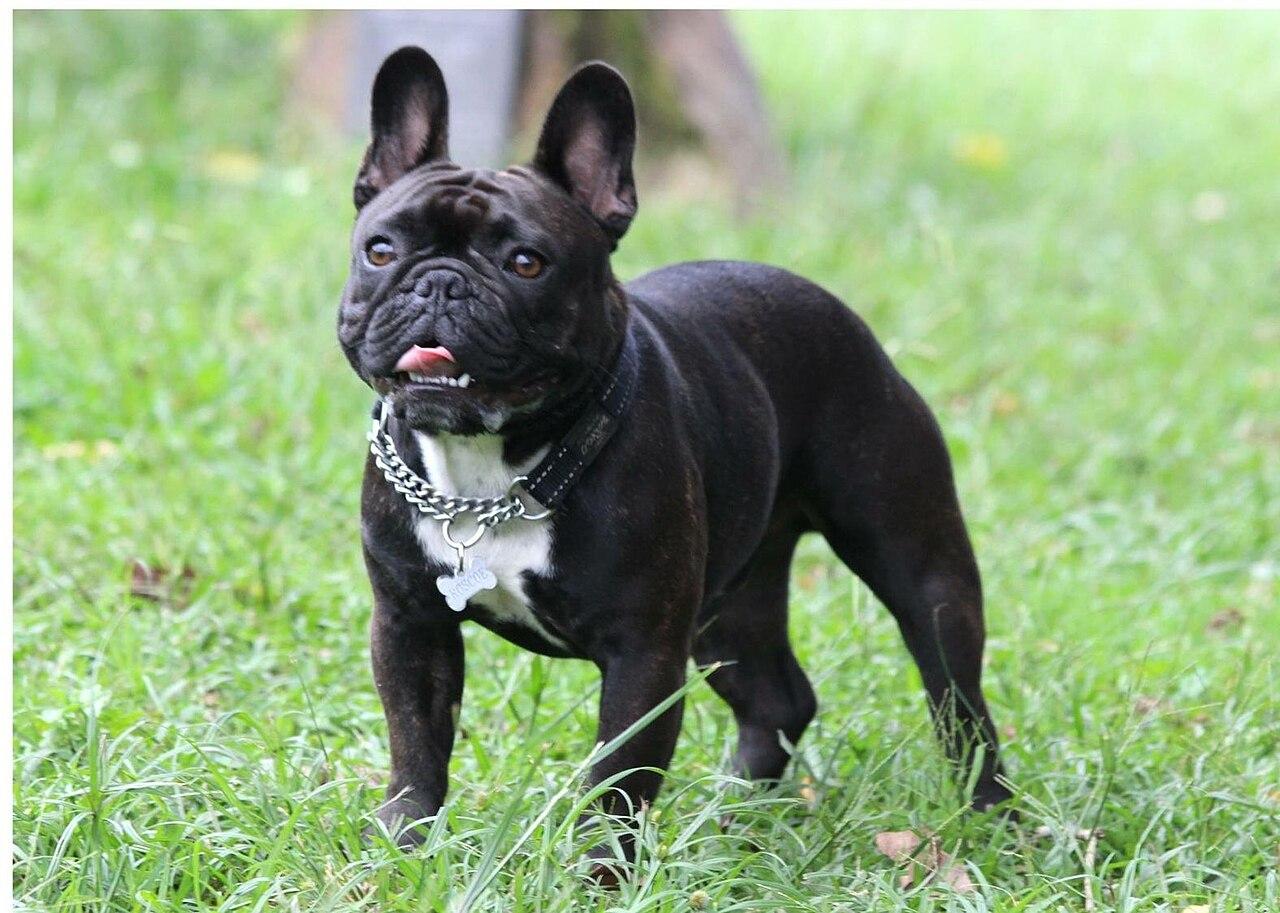
Fawn Frenchie · Brindle Frenchie · Blue Frenchie
Compact clown dog for apartments — short walks, big naps
The most popular city dog: quiet, apartment-sized, and content with two short walks plus couch time. Flat face means snoring, heat sensitivity, and potentially high vet bills.
Photo: Wikimedia Commons / TunedAutomotive / CC BY-SA 4.0
Care guide last reviewed: · Care requirements referenced from veterinary and humane standards.
Any apartment; no garden needed. Avoid heat — needs air conditioning in summer.
Quiet (2/5)
Misses company — best with someone home often
Thrives with daily company
Three curated supplies researched for this companion's specific anatomy and daily welfare

French Bulldogs have short muzzles and flat facial geometry; a tilted stainless steel bowl keeps their airways clear and prevents choking or nasal food aspiration.

Frenchie facial folds trap moisture, dirt, and yeast; daily antiseptic wiping prevents foul-smelling intertrigo and painful skin fold dermatitis.

Because brachycephalic airways cannot cool air efficiently by panting, French Bulldogs overheat dangerously fast and need evaporative cooling protection on warm walks.
As an Amazon Associate, WhatPetSuitsYou earns from qualifying purchases. Product prices and availability are accurate at Amazon and subject to change.
As a pet, the Frenchie is a compact clown: quiet (low barking, high snoring), deeply affectionate, funny with kids and visitors, and content to nap touching you for hours. It fits thin-walled flats beautifully but shadows its person and can develop separation anxiety if left 8 or more hours daily.
Mess is moderate — short-coat shedding, drool strings, and legendary wind — while swimming, heat, stairs, and long solitude are genuine no-goes. It will not guard, jog, or fetch for long, and that is the point: give it short waddles, lap time, and cool air, and you get an endlessly entertaining little companion with outsized personality.
Feed a complete small-breed adult food in two to three measured meals daily — most 20 to 28 lb adults need roughly 460 to 725 calories, or 1 to 2 cups of standard kibble, with treats under 10 percent. Frenchies gulp air through flat faces, so always use a slow-feeder bowl and rest them 30 minutes before and after meals. They are famously gassy and prone to food sensitivities: pick one steady AAFCO-balanced recipe, transition over 7 to 10 days when changing, and see the vet for persistent diarrhoea or itchy skin rather than cycling foods.
Puppies need 3 to 4 small meals of puppy formula until 6 months to protect blood sugar. Avoid chocolate, grapes, raisins, onions, garlic, xylitol, and rich table scraps, and weigh monthly — fat Frenchies breathe far worse.
Any apartment works — no garden needed — but summer cooling is the critical setup: air conditioning or a reliably cool room, cooling mat, fresh water in every room, and walks scheduled for early morning and late evening only. Use a well-fitted harness, never a neck collar, to protect the airway, and keep a crate or pen as a calm rest den.
Provide 2 or 3 short daily toilet outings plus indoor puzzle toys, since Frenchies cannot safely exercise their way out of boredom in heat. Never install them as outdoor or balcony dogs, never leave them in cars even briefly, and note they cannot swim safely — block pools and ponds, and use a life vest even for paddling.
Give two short 15 to 20 minute walks daily in cool weather plus 10 minutes of gentle indoor play and 5 minutes of training — 45 to 60 minutes of your time all-in. Wipe facial folds and tail pocket with a damp cloth or vet wipe then dry thoroughly (2 minutes daily), brush the short coat weekly, trim nails every 2 to 3 weeks, and clean ears weekly. Bathe monthly with a gentle dog shampoo.
In heat above about 24°C, skip walks entirely and substitute snuffle mats and chew toys. Watch breathing on every outing: loud effort, blue-tinged gums, staggering, or vomiting mean stop, cool with tepid water, and call the vet — heatstroke kills flat-faced dogs in minutes.
Register with a vet experienced in brachycephalic breeds and go annually, reporting any noisy breathing, snoring that worsens, gagging, fainting, or exercise intolerance. BOAS affects an estimated 35 to 45 percent of Frenchies; corrective airway surgery costs $1,500 to $6,500 and earlier assessment gives better outcomes — ask about the Kennel Club and University of Cambridge Respiratory Function Grading Scheme.
Expect allergy and skin-fold care, cherry eye or eyelid issues, ear infections, spinal IVDD risk (no stair-running or sofa leaps), and tricky anaesthesia requiring a brachy-savvy clinic. Insure from day one and keep vaccines current; small-breed dogs given several vaccines at once have slightly higher reaction rates, so your vet may space jabs across visits.
Plan $200 to $300 a month: $40 to $60 for quality small-breed food, $25 to $40 for prevention and amortised vaccines, $15 to $25 for wipes, shampoo, and toys, and $60 to $100 a month for insurance — essential, not optional, for this breed. First year runs $4,000 to $7,000 including the puppy price ($2,500 to $5,500 from health-tested breeders), vaccines, spay or neuter, and starter kit.
One BOAS surgery ($3,500 to $6,500) or spinal operation ($5,000 to $9,000) dwarfs routine spending, and allergy management (Apoquel or Cytopoint at $50 to $150 a month) is common for life. Cooling equipment and harness costs are small but non-negotiable.
Frenchies suit apartment beginners who are home often and want a low-exercise companion — training basics come reasonably easily and the exercise bar is the lowest of any breed here. But they are a poor choice if your budget is tight, you work long hot commutes, or you want a jogging or hiking partner: breathing limits, heat danger, and vet bills are the real curriculum.
Succeed by keeping the dog lean, cool, insured, and on a harness; learning fold cleaning; and accepting snoring, snorting, drool, and flatulence as household soundtrack. Buy only from breeders who show BOAS grading and spine-aware health tests — cheap untested puppies are the most expensive dogs of all.
Two short 15 to 20 minute walks a day in cool weather plus gentle indoor play is plenty — around 45 minutes total. Frenchies overheat dangerously because of their flat faces, so skip exercise above about 24°C, walk early and late, use a harness, and stop at the first sign of heavy panting or noisy breathing.
They cannot swim safely and should never be pushed to run.
Bring your puppy home no earlier than 8 weeks, book a vet check within 72 hours, and follow the standard DHPP and rabies schedule with a final dose at 16 weeks or later. Feed small-breed puppy food in 3 to 4 measured meals, use a slow feeder, crate-train from day one, and keep sessions short and reward-based.
Most important: learn heat rules — cool rooms, no midday summer walks, and any breathing distress means an emergency vet visit.
They can be, if you are home often, live in a coolable apartment, and budget generously for insurance and vet care. Exercise and training demands are modest.
The hard parts are breathing and heat management, skin-fold cleaning, snoring and flatulence tolerance, and potentially huge vet bills. If money is tight or you want a sporty dog, choose a healthier, higher-energy breed instead.
Their shortened skulls pack a normal amount of tissue into far less space — narrow nostrils, long soft palates, and narrow windpipes — so they cannot pant efficiently enough to cool down. An estimated 35 to 45 percent have BOAS.
Prevention means lean weight, air conditioning, dawn and dusk walks only, harnesses not collars, and treating heavy panting, drooling, or wobbliness as an emergency.
Take our free 15-question what pet should I get quiz to get a personalized compatibility score and see how they match your living environment.
Take the Free Pet Quiz